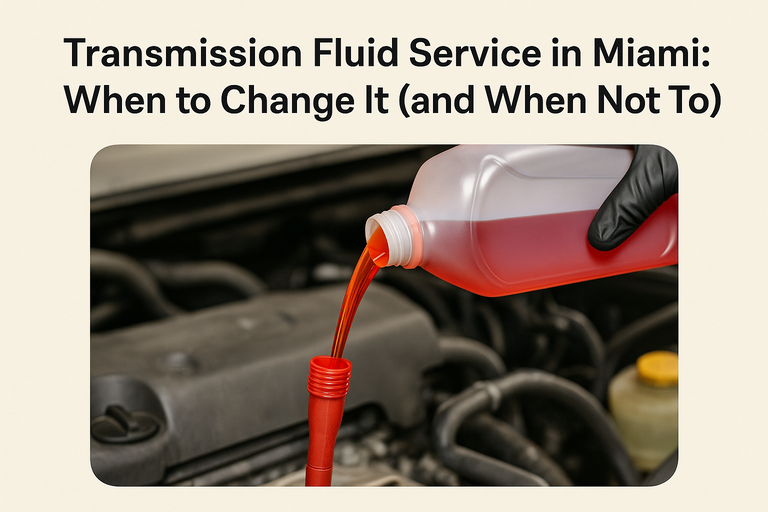
Transmission failure doesn’t usually happen out of nowhere. It gives warnings—small at first, easy to dismiss, and then suddenly expensive. Miami makes it worse: heat + humidity + stop-and-go traffic keeps transmission temps high, breaks down fluid faster, and accelerates wear.
This guide covers the most common warning signs, what they usually indicate, and when you should stop driving and get it checked.
Transmission service info:
https://www.japcarcare.com/transmission/
Schedule diagnostics:
https://www.japcarcare.com/scheduling/
The early warning signs people ignore (until they can’t)
1) Delayed engagement (Drive or Reverse takes a moment)
What it feels like: You shift into Drive/Reverse and there’s a pause before it “catches.”
Common causes:
- low or degraded transmission fluid
- internal pressure loss
- valve body issues
- worn seals
This is an early symptom that often gets worse.
2) Slipping (RPM rises but speed doesn’t match)
What it feels like: Engine revs, but the car hesitates or doesn’t accelerate smoothly.
Common causes:
- worn clutches (internal wear)
- low fluid pressure
- fluid breakdown
- overheating damage
Reality: Slipping is not a “monitor it” issue. It’s a “diagnose it” issue.
3) Shuddering under light acceleration (especially around 30–50 mph)
What it feels like: A vibration/shake like driving over rumble strips.
Common causes:
- torque converter clutch issues
- fluid condition problems
- internal wear/pressure problems
People often mistake this for tires or engine problems. It isn’t always—but it’s frequently transmission-related.
4) Hard shifting / “banging” into gear
What it feels like: Harsh upshifts or downshifts, sometimes with a jolt.
Common causes:
- sensor/input data issues
- solenoid problems
- fluid issues
- internal wear
Hard shifting can also be made worse by driving habits—aggressive acceleration followed by hard braking in traffic.
5) Transmission overheating symptoms
Common signs:
- burning smell
- fluid looks dark and smells burnt
- slipping after long traffic periods
- warning message/overheat indicator (in some vehicles)
Heat is a major factor here. Miami traffic is basically a transmission torture test.
6) Fluid leaks (and you keep topping off)
If you’re adding fluid repeatedly, you’re not maintaining the car—you’re delaying the repair while the transmission runs with unstable pressure and higher wear risk.
Leaks often come from:
- pan gasket
- seals
- cooler lines
- axle seals
Miami-specific factor: stop-and-go equals heat, heat equals wear
Even if you’re not towing, daily city traffic is “severe service.” Transmission temps rise in traffic and don’t cool down properly when you’re stuck idling. That accelerates fluid breakdown and internal wear.
That’s why preventive maintenance matters before symptoms show up:
https://www.japcarcare.com/transmission/
When to stop driving (seriously)
Stop driving and get it checked if you have:
- severe slipping
- grinding noises
- burning smell + poor shifting
- sudden loss of gears
- warning lights + limp mode
- delayed engagement getting rapidly worse
Continuing to drive can turn a repairable situation into a rebuild/replacement.
What a proper transmission diagnosis should look like
If a shop says “you need a new transmission” without doing real checks, be skeptical.
A proper diagnosis should include:
- scan for transmission and powertrain codes
- road test to replicate symptoms
- fluid condition inspection (color, smell, contamination)
- checks for leaks and fluid level
- evaluating whether symptoms suggest fluid/service, electronics, or internal failure
If the transmission is failing internally, the next step should be a clear explanation of options—not vague fear tactics.
Common questions that waste people’s money
“Should I just change the fluid?”
If you have symptoms, fluid service may help some cases, but it can also be irrelevant if the problem is solenoids, valve body, torque converter, or internal wear. Diagnose first.
“Can an additive fix it?”
Additives mostly mask symptoms temporarily. If you rely on them, you’re usually buying time—not solving the problem.
“It only happens sometimes… can I wait?”
Intermittent symptoms are often early-stage failures. Waiting rarely makes it cheaper.
FAQs
Why is my transmission worse when it’s hot outside?
Heat increases transmission temps, and worn fluid/components perform worse under stress. Miami heat makes borderline problems obvious.
Can low fluid cause slipping?
Yes. Low fluid = low pressure = slipping and harsh shifts. But don’t just top off without finding the leak.
Is a shudder always transmission-related?
Not always, but it’s common—especially if it happens under light acceleration at steady speeds.
What if it’s shifting hard after battery replacement?
Some vehicles reset adaptive learning when power is disconnected. It may relearn, but if it persists, it needs evaluation.